
Mitigating Subterranean Moisture Ingress in Geneseo, IL
Challenge
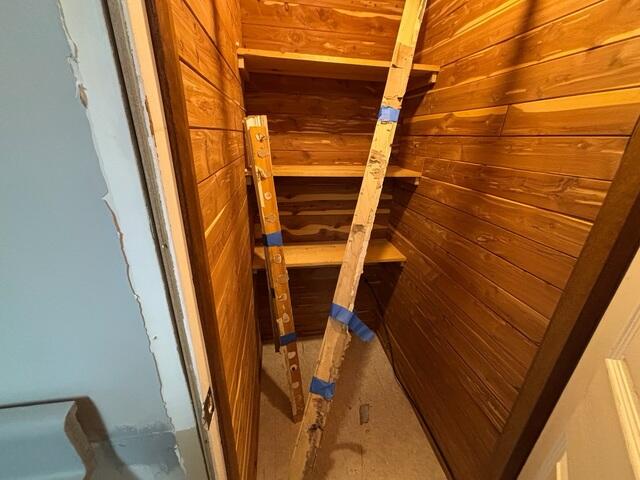
A residential property in Geneseo, IL, presented with severe sub-grade moisture infiltration, chronic hydrostatic seepage at the floor-wall cold joints, and elevated relative humidity levels that rendered the subterranean envelope structurally unviable for residential or storage utility. System Design Specialist Jamie Cox performed a rigorous forensic evaluation of the site's hydraulic profile, diagnosing active groundwater transmission driven by localized hydrostatic pressures and high ambient moisture vapor transmission. The diagnostic investigation identified advanced moisture vulnerability along the entire below-grade perimeter, where seasonal water tables forced liquid water directly through the point of least resistance. Simultaneously, capillary action within the porous concrete foundation walls allowed continuous moisture vapor transmission into the basement envelope, raising the interior relative humidity well above the threshold for microbial proliferation, threatening indoor air quality, and completely prohibiting finish work or asset storage. To establish permanent environmental stabilization without executing high-cost, disruptive exterior excavation, Jamie engineered an interior sub-floor drainage network paired with complete envelope isolation, designed to intercept source-point water, block lateral vapor transmission, provide mechanical evacuation redundancy, and actively regulate psychrometric loads.
Solution
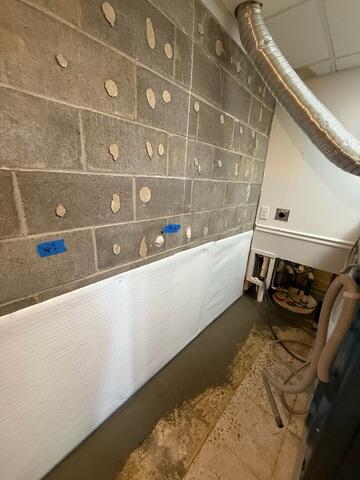
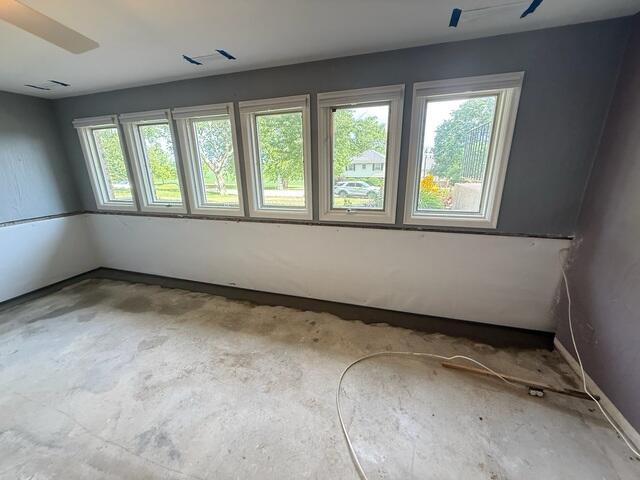
Structural Repair Foreman Jacob Oetzman and his technical installation crew, Antonio and Devin B, mobilized to execute the precision deployment of the engineered waterproofing system within strict structural tolerances. The crew initiated the installation sequence by performing a mechanical breaching of the concrete slab perimeter, excavating a precise trench down to the top of the structural concrete footing and clearing all loose aggregate to establish an unobstructed flow line. Along this perimeter, the team installed the WaterGuard® Below-Floor Drain System, utilizing its specialized solid-wall design to sit directly on top of the footing, safely isolated above the sediment-clogging mud zone while capturing weeping moisture from the floor-wall joint via a unique wall-flange extension. Concurrently, the crew treated the vertical foundation walls by mechanically fastening the CleanSpace® Wall Vapor Barrier, a high-durability, 20-mil poly-reinforced white membrane, to the masonry using non-corrosive nylon anchors. All seams were hermetically sealed with engineered vapor tape to create an impermeable barrier against capillary vapor transmission, with the bottom edge seamlessly tucked behind the drainage flange to channel all moisture down into the track. To manage the collected groundwater, the drainage line was sloped to discharge directly into a high-capacity TripleSafe™ Sump Pump System, which provides multi-stage mechanical redundancy via a primary AC pump, a secondary high-output AC pump for peak surge events, and a third Ultra-Sump® DC-powered battery backup pump to sustain operational continuity during localized power grid failures. To stabilize the ambient indoor air quality, the team installed the high-efficiency, commercial-grade SaniDry Sedona™ Dehumidifier, which continuously monitors dew points to hold relative humidity below 50%, effectively arresting mold spore germination and stabilizing wood moisture content. Following a meticulous site remediation and a flush-pour application of high-strength concrete over the sub-floor drainage line, the technical intervention by MidAmerica Basement Systems successfully neutralized all subsurface hydraulic vectors and transformed the compromised environment into a permanently dry, healthy, and structurally secure space.