Structural Stabilization and Sub-Floor Waterproofing in Rock Island, IL
Challenge
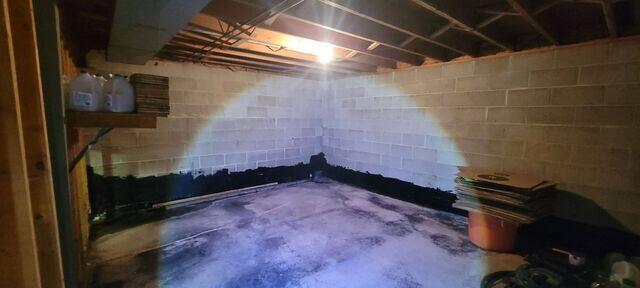
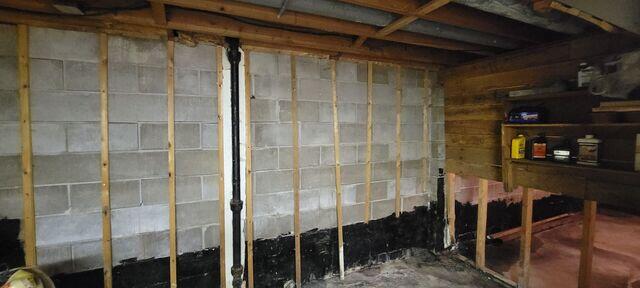
A residential basement in Rock Island, IL, presented a critical combination of hydrostatic pressure, active wall seepage, and severe structural failure. The subterranean concrete block walls were exhibiting significant bowing and inward deflection, indicating that the lateral forces exerted by the saturated expansive soils outside had surpassed the structural capacity of the foundation. This substantial movement left the homeowners deeply concerned about a potential wall collapse, putting their long-term retirement and relocation plans to Tennessee on hold.
Beyond the imminent structural threat, the basement suffered from severe water intrusion. Hydrostatic pressure was forcing ground moisture through the floor-wall joint (the footing cove) and microscopic fractures in the masonry blocks. This unmanaged water accumulation turned the lower level into a damp, unusable space, threatening the home's indoor air quality and steadily eroding its market value.
System Design Specialist Andrew Sagar performed a comprehensive structural evaluation. He diagnosed that the bowing walls required immediate lateral stabilization to arrest the inward movement, while the moisture infiltration demanded a dedicated interior drainage path to relieve hydrostatic pressure and safely redirect incoming water.
Solution
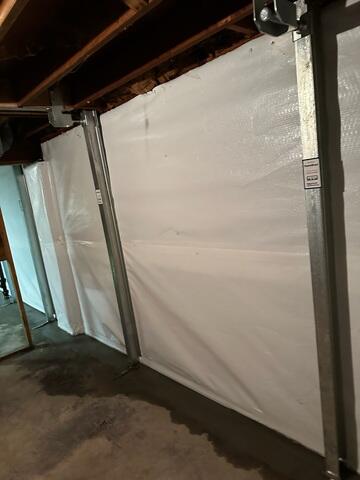
To permanently stabilize the foundation and restore a completely dry environment, the production team executed a multi-layered engineering solution. Foreman Jacob Quinn, along with crew members Devin S., Caleb, and Val, began the structural intervention by installing the PowerBrace™ Wall Repair System. These heavy-duty, zinc-coated steel I-beams were secured flush against the bowing walls, anchored firmly to the basement floor and the heavy rim joists overhead. Utilizing a specialized, adjustable bracket system, the PowerBrace™ immediately halted further inward wall movement, with the capacity to be tightened over time to potentially push the foundation back toward its original position.
With the structural integrity secured, the crew shifted focus to the waterproofing infrastructure. They excavated a trench along the interior perimeter of the basement floor to install the WaterGuard® Sub-Floor Drainage System. Unlike standard perforated pipes placed outside the footing that are prone to clogging with mud, WaterGuard® sits entirely out of the soil line on top of the footing. This positioning allows it to capture wall seepage and rising groundwater seamlessly without ever clogging.
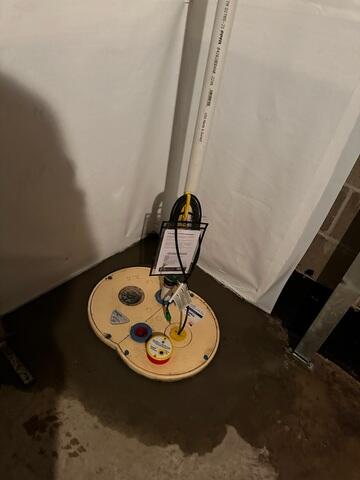
The perimeter drainage lines were then pitched to discharge directly into a high-capacity SuperSump® Sump Pump System. Fitted with a powerful, top-tier pump and a heavy-duty airtight lid, the SuperSump® efficiently evacuates the collected water out and away from the home’s foundation.
To address vapor transmission through the porous masonry blocks, Jacob and his crew encapsulated the foundation walls using the CleanSpace® Wall Vapor Barrier. This durable, 20-mil thick, puncture-resistant plastic liner blocks incoming moisture vapor, directing any active wall seepage downward directly into the WaterGuard® channel below. The white finish of the liner also completely brightened the basement space.
By combining structural reinforcement with advanced sub-floor water management, the team permanently neutralized the lateral soil pressures and moisture threats. The basement is now thoroughly stabilized, dry, and healthy, allowing the homeowners to move forward with their retirement plans to Tennessee with total peace of mind.