
Multi-Stage Hydrodynamic Discharge & Sub-Floor Perimeter Drainage for Shared Subterranean Mechanical Volumes
Challenge
A multi-tenant residential foundation in Maquoketa, IA, experienced severe groundwater intrusion across a shared subterranean volume utilized for tenant laundry amenities and electrical appliance housing. Diagnostic Engineer Tim Rollet performed a hydrogeological site assessment and determined that localized seasonal water table elevation exerted hydrostatic pressure against the foundation walls and footings.
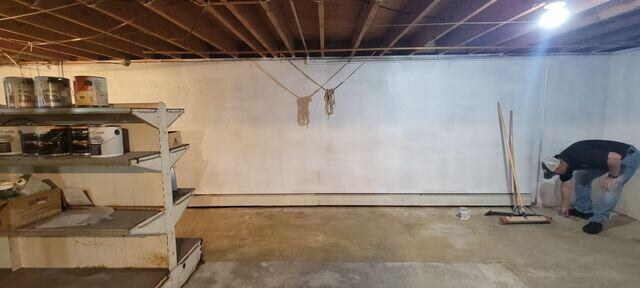
Capillary action and pressure differentials forced groundwater through the wall-footing cold joint, producing standing surface water across the concrete floor slab. This chronic water intrusion degraded interior air quality, increased risks of electrical appliance short-circuiting, and created structural moisture risks. The engineering objective required intercepting subterranean water surges before floor slab migration, establishing a non-clogging perimeter conveyance path, and installing a multi-redundant pumping station capable of handling high-volume inflows and power grid failures.
Solution
To mitigate hydrostatic pressure and guarantee continuous water removal under extreme weather conditions, Diagnostic Engineer Tim Rollet engineered an integrated interior hydro-management system incorporating WaterGuard® Interior Drainage and the multi-stage TripleSafe™ Sump Pump System. Operations Lead Justin Maddox and field technician Devin S. executed the subterranean installation.
Phase one involved sub-floor trenching and perimeter channel placement. Justin and Devin S. excavated the concrete slab along the interior perimeter, exposing the top of the concrete wall footing. The team installed the engineered WaterGuard sub-floor channel system directly atop the footing, elevating the intake zone above native mud and sediment layers to prevent channel clogging. Featuring a built-in wall flange, the channel captures seepage from both the wall face and the floor-wall joint, directing flow toward the pumping system.
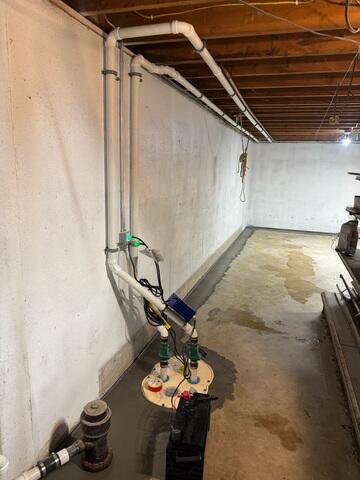
Phase two established multi-stage discharge redundancy. The crew excavated a sump pit and installed the TripleSafe sump pump system, which houses three distinct pumping units within a single heavy-duty liner. The primary stage utilizes a 1/3 HP cast-iron AC pump to handle standard daily groundwater infiltration. The secondary stage incorporates a 1/2 HP high-capacity AC pump that automatically engages if water levels rise rapidly during torrential rain events, generating a combined output exceeding 6,200 gallons per hour at a 10-foot head. The tertiary backup stage features an UltraSump battery-backup system that operates automatically during municipal power outages, driven by a high-capacity DC battery capable of pumping over 11,500 gallons on a single charge.
Phase three finalized the installation. Justin and Devin S. routed check-valve-equipped discharge lines away from the home and backfilled the perimeter trench with fresh concrete flush with the existing floor slab. The installation successfully eliminated subterranean standing water, protected critical mechanical appliances, and provided a permanently dry, reliable space for tenant use.