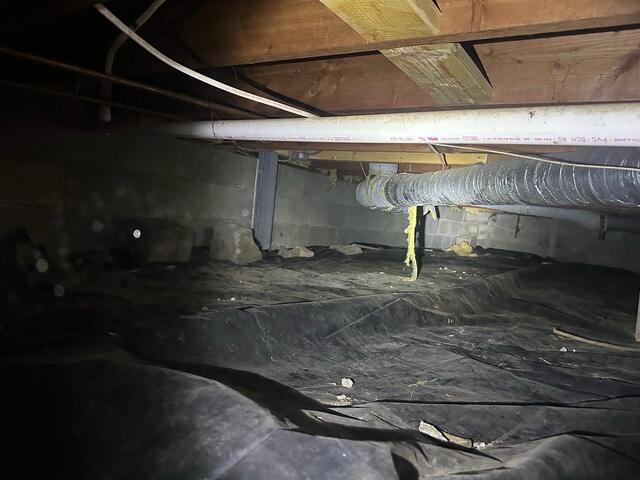

Subterranean Environmental Stabilization and Vapor Encapsulation in Iowa City, IA
Challenge
The residential property in Iowa City exhibited advanced environmental failure within its unconditioned crawl space. Diagnostic assessments revealed elevated relative humidity (RH) profiles and active hydrostatic vapor transmission migrating through both the earth substrate and porous masonry foundation walls. This chronic moisture influx led to severe microbial off-gassing and sub-floor odor transfer. Because of the stack effect—where rising warm air within the home's living areas creates a vacuum that draws air upward from the lowest foundation levels—these airborne contaminants and high-humidity air were pulled directly into the upper living spaces. This process compromised indoor air quality (IAQ), threatened the home's structural framing with wood-rot fungi, and increased the thermal load on the residential HVAC system.
Solution
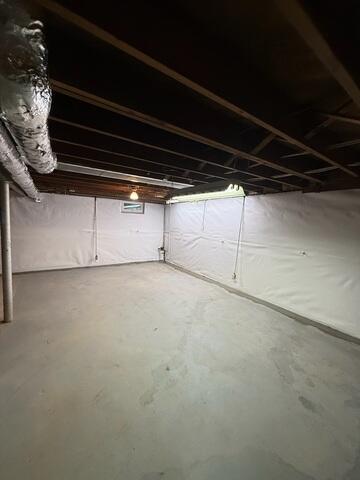
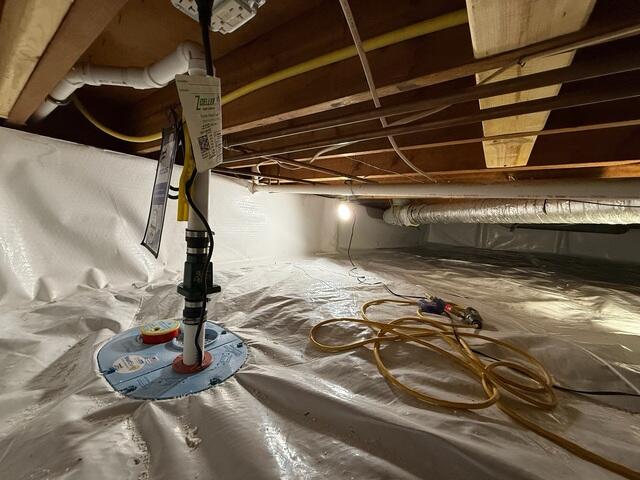
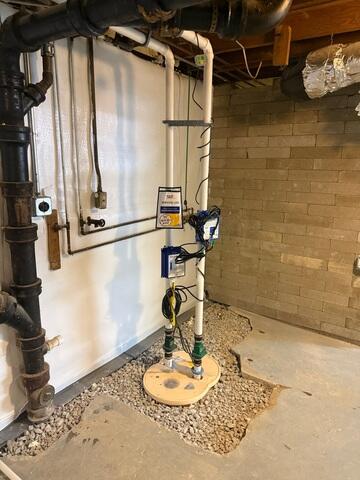
To stabilize the environment, System Design Specialist Jeff Kelchen engineered a multi-tiered remediation strategy executed by Production Foreman Jacob Oetzman and his crew, Antonio and Devin B. The team first established a sub-floor flow plane by laying down dimpled CleanSpace® Drainage Matting to direct hydrostatic water toward a high-capacity, multi-stage TripleSafe™ sump pump system equipped with battery-backup redundancy. The crew then isolated the home from earth-born moisture by installing the CleanSpace® encapsulation system—a heavy-duty, 20-mil antimicrobial poly-composite vapor barrier mechanically fastened and sealed across the floor and up the walls. To optimize the thermal envelope, SilverGlo™ graphite-infused radiant insulation panels were secured to the foundation perimeter to prevent thermal bridging. Finally, a high-efficiency SaniDry Sedona dehumidifier was commissioned to continuously regulate the microclimate, permanently maintaining ambient relative humidity below the 50% threshold necessary to inhibit microbial growth and safeguard the home's structural integrity.