
Solidification and Pavement Stabilization in Waterloo, IA
Challenge
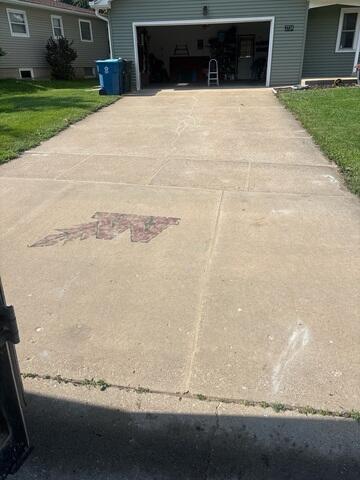
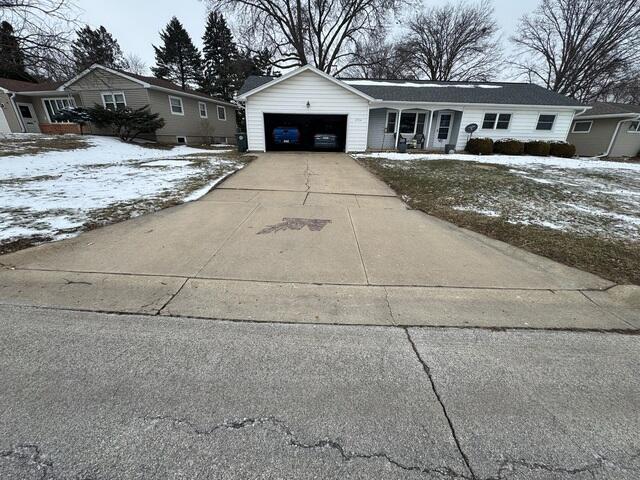
In Waterloo, IA, a residential concrete driveway remediation project addressed critical structural failures including differential slab settlement, localized voids, disrupted drainage hydrology, and active pedestrian tripping hazards. The expert engineering team at MidAmerica Basement Systems resolved these issues using high-density polyurethane foam injection via the PolyLevel® system, paired with NexusPro® joint and crack sealant. This successful project was designed by System Design Specialist Daniel Kelchen, and executed by Foreman Ricky and crew member Jaylen.
A detailed site inspection performed by Daniel Kelchen identified severe mechanical failure across multiple contiguous concrete driveway plates. The diagnostic process traced the distress to subsurface architectural instability rather than structural failure of the concrete itself. The primary failure mechanism was localized subgrade consolidation and erosion caused by typical Eastern Iowa seasonal freeze-thaw cycles and poorly managed surface runoff, which allowed water to infiltrate unsealed joints. This moisture caused the fine aggregate particles in the underlying fill soil to wash out over time, leaving structural voids beneath the load-bearing slabs and stripping the pavement of its uniform subgrade support. Without structural subgrade support, the dead load of the heavy concrete plates combined with vehicular live loads caused the slabs to drop unevenly, creating sharp vertical lips up to 1.75 inches and transforming the driveway into a significant pedestrian hazard. Furthermore, the settlement reversed the driveway's original pitch, creating a negative slope that actively channeled surface runoff back toward the residential foundation wall, drastically increasing local hydrostatic pressure and exposing the sub-grade block walls to risk of bowing, cracking, or water intrusion.
Solution
To remediate the site, the team needed to achieve major engineering milestones by filling the hidden subsurface voids, consolidating the weakened soil matrix, and lifting the heavy slabs back to an even plane to restore proper drainage. Traditional methods like mudjacking were rejected because the heavy weight of cementitious slurries can cause further settlement on top of weak subgrade soils. Instead, a specialized two-part hydrophobic polymer approach was chosen. This lightweight material provides excellent structural lift without adding unneeded weight to the soil, and its waterproof nature ensures it will never wash away from future water exposure.
Foreman Ricky and crew member Jaylen executed the recovery plan with high precision using a non-destructive deployment sequence. The crew mapped a custom grid over the settled concrete and drilled small injection ports through the slabs, which are preferred over the massive holes required by mudjacking as they leave the existing structural mesh and concrete matrix intact. Mechanical injection nozzles were secured into the ports, and the PolyLevel® components were injected under pressure. As the two components mix inside the gun, they trigger an immediate exothermic reaction, expanding into a rigid, high-density, closed-cell structural foam. The expanding liquid naturally flows into the absolute lowest points and voids first, and once these empty pockets are fully packed, the massive expanding foam exerts an upward force to gently lift the heavy slabs back to their original design elevation. Throughout the process, the crew monitored the lift to achieve perfectly flush, accurate joints across all slab intersections.
Following successful slab stabilization, the injection ports were filled with a durable cementitious grout. To protect the repair long-term, Ricky and Jaylen cleaned all debris and organic matter out of the active joints and cracks before applying the NexusPro® sealant. This advanced formulation delivers exceptional UV resistance and elasto-plastic elasticity, maintaining a perfect bond to the concrete walls through severe seasonal temperature swings to prevent water from getting under the slabs again. The engineering deployment successfully restored the structural integrity of the driveway by completely eliminating all uneven offsets, restoring a positive drainage slope so rainwater sheds safely away from the home, and thoroughly stabilizing the underlying soil with a permanent, waterproof polymer matrix shielded from future freeze-thaw shifting.